The rise of artificial intelligence has changed how we create. It lets artists explore new ideas and expand their imagination.
Generative AI is a part of artificial intelligence used in art. It uses complex algorithms to make new and creative content. This includes everything from pictures to music.
This technology helps artists do more than they could before. It also brings new ways to express creativity. So, the world of art is changing fast, thanks to humans and machines working together.
Key Takeaways
- The integration of artificial intelligence is transforming the creative process.
- Generative AI is being used in various artistic fields to enhance human creativity.
- This technology is enabling the production of novel and innovative content.
- The collaboration between humans and machines is driving a significant transformation in the creative industry.
- New avenues for artistic expression are being opened up by Generative AI.
Understanding Generative AI: An Overview
Generative AI is a cutting-edge technology that can create new, high-quality content. It has caught a lot of attention for its ability to change many industries. This is thanks to machine learning and deep learning techniques.
Generative AI is a part of AI that makes new content, like images, music, text, and code. It’s different from traditional AI, which just analyzes data. Generative AI can make things that look like they were made by humans.
Definition of Generative AI
Generative AI can make new data that looks like real data. It uses special algorithms and neural networks trained on big datasets. These models learn from the data and then make new, original content.
Differentiating Between AI Types
It’s important to know the difference between Generative AI and other AI types, like discriminative AI. Discriminative AI is for tasks like classifying and predicting. Generative AI is for making new content. This shows why Generative AI is special and useful in its own way.
- Generative AI creates new content.
- Discriminative AI classifies or predicts based on existing content.
- The training data for Generative AI is used to learn patterns for content creation.
Evolution of Generative AI Technologies
The world of Generative AI has grown a lot thanks to deep learning. At first, these models could only do simple things. But now, thanks to new breakthroughs, we have models that can make very realistic and varied content.
Important steps in Generative AI’s growth include the creation of Generative Adversarial Networks (GANs) and Variational Autoencoders (VAEs). These tools have helped Generative AI do amazing things, like creating art and music.
The Mechanism Behind Generative AI Models
Generative AI models are fascinating because they can create new, unique content. They use complex algorithms and neural networks to do this.
Neural Networks Explained
At the core of Generative AI are neural networks, inspired by the human brain. Neural networks have layers of nodes that process information. These networks learn from huge datasets, creating new content based on what they learn.
They are trained on data like images, text, or music. This training helps them spot and mimic patterns in the data.
Training and Data Requirements
The quality and amount of training data are key for Generative AI models. Large datasets are needed to teach the model about different patterns. For example, text models are trained on huge amounts of text to learn how to write well.
- Data quality affects the model’s ability to generate realistic content.
- The size of the dataset influences the model’s diversity and creativity.
- Data preprocessing is critical for a good training process.
How Models Generate New Content
Generative AI models create new content by using what they learned from training. They use algorithms to make new images, text, or music. This new content looks similar to what they were trained on.
These models can be adjusted to make specific types of content. This makes them useful in many industries.
Applications of Generative AI Across Industries
Generative AI can look at huge amounts of data. It’s changing how different industries work and make things valuable.
Creative Arts and Entertainment
In creative arts and entertainment, Generative AI is making a big impact. It can look at lots of data and come up with new ideas. For example, AI can:
- Make music
- Create art
- Help write scripts for movies and TV
This makes the creative process better and lets artists try out new things.
Marketing and Advertising
In marketing and advertising, Generative AI is used for:
- Making customer experiences more personal
- Creating ads that are just right for people
- Coming up with new marketing ideas
With neural networks, companies can understand what customers like. This helps them make better marketing plans.
Healthcare Innovations
The healthcare field is also getting better thanks to Generative AI. It’s helping in areas like:
- Finding new medicines
- Personalized treatments
- Looking at medical images
Generative AI can make fake data for training medical models. This makes doctors better at diagnosing and treating patients.
Case Studies: Generative AI in Action
Artificial intelligence is changing how we make art, music, and films. Generative AI lets creators make new, amazing content that was once impossible.
Artificial intelligence is now part of making art, music, and films. It helps artists, musicians, and filmmakers come up with new ideas and improve their work.
Success Stories in Art Creation
Emily, a young artist, used Google’s DeepDream to create unique patterns. She mixed these patterns with her traditional paintings. This mix of human and machine learning made her art stand out in local shows.
Generative AI isn’t just for artists. Companies use it to make new designs and content for ads.
Music Composition with AI
Generative AI is also changing music. It looks at lots of music to make new songs that sound like they were written by humans.
AI helps musicians and composers try out new sounds and styles. It makes their creative work better.
Enhancements in Film Production
In movies, Generative AI helps with special effects, scripts, and editing. It makes making movies faster and cheaper. It also lets filmmakers create complex effects that were hard to do before.
By using Generative AI, filmmakers can tell more exciting stories and make movies look better. This makes movies more fun to watch.
The Role of Generative AI in Content Creation
Generative AI is changing content creation. It brings new ways to be creative and innovate. This tech improves the creative process and opens new doors for creators in many fields.
Writing and Journalism
Generative AI is big in writing and journalism. It helps authors and journalists with AI-generated text prompts. These prompts offer ideas and suggestions that might not have been thought of before.
Writers and poets can use AI prompts to get past writer’s block. They can also explore new themes and styles. AI also helps with research by quickly sorting through data and finding important info.
Graphic Design and Visual Content
Generative AI is changing graphic design and visual content. It uses deep learning algorithms to create many visual elements. This is great for marketing and ads, where high-quality visuals are always needed.
Designers can use AI visuals as inspiration or a starting point. This saves time and boosts creativity. AI can also make visual content more personal for different audiences.
Personalized Marketing Materials
Personalization is key in marketing today. Generative AI helps make tailored marketing materials. It uses natural language processing and deep learning to create content that speaks to individual customers.
AI makes personalized emails and product recommendations. It’s changing marketing by making it more effective and efficient. Businesses can now connect with their audience in a more personal way.
Ethical Considerations in Generative AI
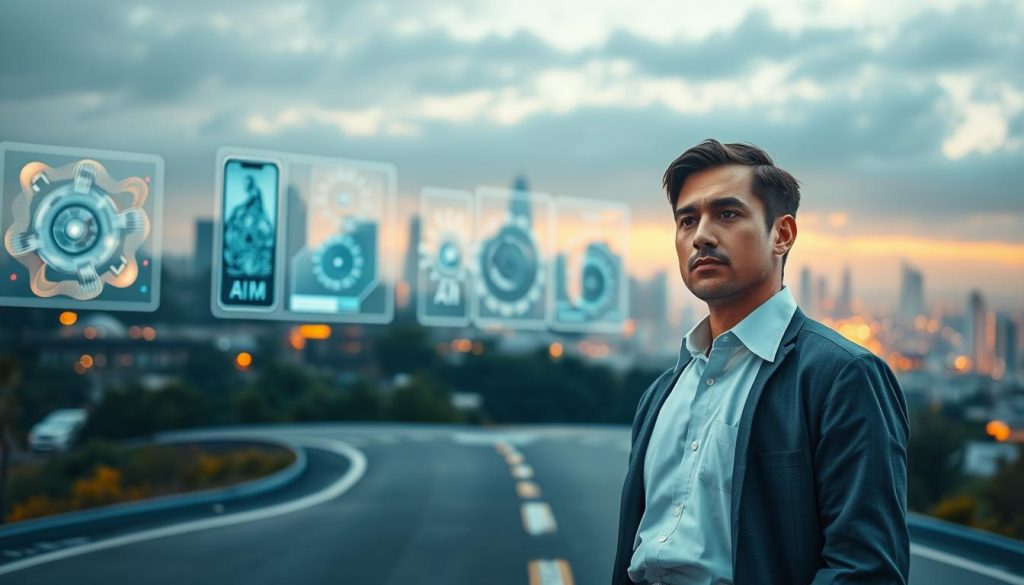
Generative AI is growing fast, but it raises big ethical questions. It’s causing debates in many fields. We need to understand and solve these ethical problems.
There are many ethical issues with Generative AI. These include copyright, bias, and jobs. These problems affect how AI is made and used, and how it impacts society.
Addressing Copyright Issues
Copyright is a big ethical worry with Generative AI. It’s hard to tell who owns the work when AI creates it. For example, if AI makes something from copyrighted data, who owns it?
- We need new laws for AI-generated content.
- AI makers must think about copyright in their data.
- We need clear rules for using AI content in business.
AI Bias and Misrepresentation
AI bias and misrepresentation are major issues. If AI is trained on biased data, it will make biased content. This can lead to unfairness or discrimination.
- Using diverse and fair data can reduce bias.
- Checking AI content regularly can spot and fix biases.
- Telling people how AI is used can help manage expectations and avoid unfairness.
Implications for Employment
Generative AI’s growth means big changes for jobs. AI can do creative tasks, which might replace some jobs.
To help, we should teach workers new skills to work with AI. We also need to think about how job loss affects society and support workers who lose their jobs.
The future of Generative AI depends on balancing new tech with ethics. By tackling these issues, we can make sure Generative AI helps everyone, not just a few.
Challenges Faced by Generative AI
Generative AI faces many challenges. It has made big steps in artificial intelligence and machine learning. But, its growth and use are full of hurdles.
Technical Limitations and Risks
Technical issues and risks are big problems for Generative AI. It can create false or harmful content. Also, data quality and model training complexity are big challenges.
The risk of misinformation is a big worry. Generative AI can make fake but believable information. It’s key to make sure AI content is true and reliable.
- Inadequate training data can lead to biased models.
- The complexity of neural networks makes them difficult to interpret.
- There’s a significant risk of AI-generated misinformation.
Public Perception and Trust Issues
Getting people to trust Generative AI is hard. The way AI makes decisions is not always clear. We need to make AI more open.
It’s also important to teach people about AI’s strengths and weaknesses. This helps build trust in AI.
- Improving model transparency.
- Enhancing user education about AI capabilities.
- Fostering a dialogue between developers and users.
Regulatory Frameworks
We need rules to guide Generative AI’s use. These rules should help innovation and protect people and society.
Rules should cover data privacy, intellectual property, and AI harm. Making these rules needs work from policymakers, industry leaders, and AI experts.
By tackling these issues, we can make Generative AI better. This way, it can help more while reducing its risks.
The Future of Generative AI

The future of generative AI is not just about new tech. It’s also about how humans and machines can work together better. As AI gets smarter, we’ll see big leaps in deep learning and natural language processing. This means machines will understand and create content that’s more complex and detailed.
Emerging Trends in AI Development
One exciting trend is making machines understand and show emotions. This could lead to AI that feels and acts more like us. It might make our interactions with AI more empathetic and personal.
Another trend is combining human creativity with AI’s power. This mix could lead to new ideas and art that we can’t even imagine yet.
Potential Impact on Various Industries
Generative AI will change many industries. In the arts, AI could change how we make music, art, and write stories. In healthcare, AI could help create personalized treatments and aid in research.
- Creative Arts: AI-assisted art creation, music composition
- Healthcare: Personalized medicine, medical research assistance
- Marketing: AI-generated content, personalized advertising
Predictions for AI Creativity
AI has come a long way in mimicking creativity, but true creativity is unique to humans. Yet, the partnership between humans and AI could lead to amazing results. As AI gets better, we’ll see more complex and creative AI content.
A study found that AI can mimic creativity by recognizing patterns and combining them. But true creativity, tied to personal experiences and meaning, is something only humans can do. Despite this, AI can greatly enhance human creativity, opening up new possibilities.
Conclusion: The Creative Power of Generative AI
Generative AI is a game-changer, opening doors to new creative possibilities. It uses complex neural networks to create content we never thought possible.
Innovation and Responsibility
As we grow Generative AI, we must balance innovation with responsibility. We need to tackle issues like copyright and AI bias. This ensures the tech benefits everyone.
Future Creative Journeys
Generative AI blends AI innovation with human creativity. It invites us to think about the mix of art, tech, and imagination. As it evolves, it will change many fields, from arts to healthcare.
Learning about Generative AI opens up new ways to express ourselves and solve problems. It’s a step towards a future where tech and creativity meet.